Platform comparison
| Platform | YES odds | NO odds | Fee | KYC | Settlement | |
|---|---|---|---|---|---|---|
Polymarket (via Kalshi Fees) Pick polygram.ink (preferred broker) |
100% | 0% | 0% (USDC on-chain) | No-KYC up to $1,500 | USDC, auto via UMA oracle | Place a position → |
Polymarket (direct) polymarket.com |
100% | 0% | 0% | Geo-blocked in US/UK/EU | USDC, on-chain | Place a position → |
Kalshi kalshi.com |
— | — | Up to 7% per trade | US-only, KYC required | USD | Place a position → |
Betfair Exchange betfair.com |
— | — | 2-5% commission | Full KYC from first trade | GBP / EUR | Place a position → |
Manifold Markets manifold.markets |
— | — | Play-money (mana) | None — play-money | Mana (no cash-out) | Place a position → |
Outcome probabilities
Current market-implied probability for each outcome, from the live order book.
| Outcome | Probability |
|---|---|
| Masoud Pezeshkian | 100% |
| Shehbaz Sharif | 100% |
| JD Vance | 100% |
| Donald Trump | 100% |
| Mohammad Bagher Ghalibaf | 16% |
| Abbas Araghchi | 4% |
| Marco Rubio | 3% |
| Benjamin Netanyahu | 2% |
| Hamad bin Isa Al Khalifa | 2% |
| Pete Hegseth | 1% |
| Recep Tayyip Erdogan | 1% |
| Abdel Fattah el-Sisi | 1% |
| Mohamed bin Zayed Al Nahyan | 1% |
| Mishal Al-Ahmad Al-Jaber Al-Sabah | 1% |
| Mojtaba Khamenei | 1% |
| Steve Witkoff | 1% |
| Sheikh Tamim bin Hamad Al Thani | 1% |
| King Abdullah II | 1% |
| Mohammed bin Salman | 0% |
| Ali Larijani | 0% |
Market context
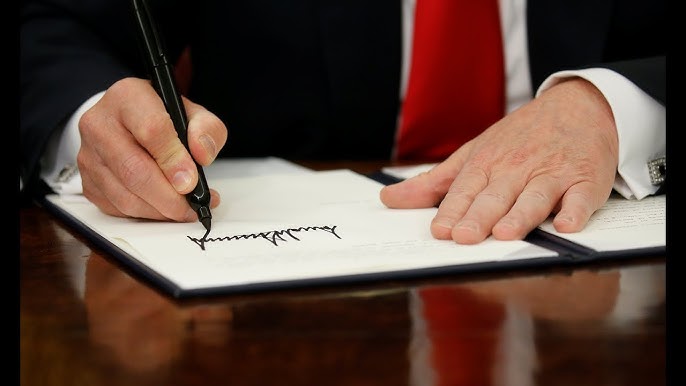
A preliminary memorandum of understanding between the United States and Iran has already been electronically signed, establishing a 60-day ceasefire, reopening the Strait of Hormuz, and lifting the US naval blockade on Iranian ports. This interim deal, described by Vice President JD Vance as a vague, page-and-a-half document, sets the stage for technical negotiations on Iran’s nuclear programme and potential sanctions relief, though a formal written agreement signed by the listed individual in an official capacity remains the specific resolution condition for this market [1][3].
Historically, the US withdrawal from the 2015 JCPOA in 2018 under Trump’s first administration created deep scepticism regarding any new nuclear accord, yet the current 3% crowd-implied probability reflects a more nuanced reality where a preliminary framework is already active [2][5]. While the 2015 deal required strict uranium limits for sanctions relief, the current talks focus on prohibiting enrichment on Iranian soil via a regional consortium, a proposal Iran has rejected as a red line, suggesting that a final, signed agreement by the specific individual is unlikely before the August 2026 deadline despite the ceasefire [6].
Traders should monitor the upcoming 60-day negotiation window for concrete announcements on uranium stockpile verification and the release of frozen assets, which Vance noted are contingent on Iran fulfilling obligations [3]. The immediate catalyst is the formal signing ceremony in Geneva, expected to coincide with the Strait of Hormuz reopening, but the market’s low probability hinges on whether the listed individual will personally sign a definitive written agreement rather than the current electronic memorandum [3]. Programmatically, this market would be approached by setting conditional orders on news feeds tracking Vance’s statements and IAEA reports, as the deal’s success depends entirely on Iran’s compliance with the initial vague terms [3][6].
Methodology
This page reviews Who will sign U.S. x Iran deal? across five venues. The live probability is the Polymarket mid-price, sourced directly from the on-chain Polygon order book; the comparison columns benchmark each venue on fee structure, KYC, settlement currency and payment rails. Every CTA routes to Kalshi Fees, which mirrors the Polymarket order book at 0% fees.
Resolution & payout
At resolution the UMA oracle takes over: a proposer posts the outcome with a bond, any token holder can dispute within two hours. Without dispute the result is accepted and the smart contract distributes USDC instantly.
On Kalshi (CFTC-regulated) resolution runs through their in-house clearing engine in USD. Betfair Exchange settles after match end in the account's local currency. Manifold pays no cash — only its in-platform "mana" currency.
FAQ
- How does resolution work?
- Through the UMA Optimistic Oracle on Polygon: a proposer submits the outcome, a two-hour challenge window opens, and USDC payouts settle automatically once the result is final.
- What does Polymarket cost to trade?
- Polymarket itself charges 0% — the only cost is the Polygon network fee, typically under $0.01 per transaction. Off-chain venues like Kalshi or Betfair charge 2-7% commission.
- How fast are USDC deposits?
- Polygon credits deposits after 12 confirmations — usually under 30 seconds. Withdrawals follow the same path and land back in your wallet within minutes.
- Do I need to KYC for this market?
- On Polymarket directly, no — it's wallet-based. Intermediary brokers like Kalshi Fees trigger KYC only above $1,500 of lifetime trading volume; under that you trade pseudonymously with a single wallet address.
- How reliable are the quoted odds?
- The YES/NO percentages are the live mid-prices of the Polymarket order book. On deep markets they move every few seconds; on thinner ones you'll see short plateaus.
%22%2F%3E%3Cpath%20d%3D%22M%206%2066%20A%2026%2026%200%200%201%2058%2066%22%20fill%3D%22%23E6B98D%22%20opacity%3D%220.9%22%2F%3E%3Ccircle%20cx%3D%2232%22%20cy%3D%2226%22%20r%3D%2222%22%20fill%3D%22%23F5CBA7%22%2F%3E%3Cpath%20d%3D%22M%2010%2026%20A%2022%2028%200%200%201%2054%2026%22%20fill%3D%22%230ea5e9%22%20opacity%3D%220.9%22%2F%3E%3C%2Fsvg%3E) and
and%22%2F%3E%3Cpath%20d%3D%22M%206%2066%20A%2026%2026%200%200%201%2058%2066%22%20fill%3D%22%23E6B98D%22%20opacity%3D%220.9%22%2F%3E%3Ccircle%20cx%3D%2232%22%20cy%3D%2226%22%20r%3D%2222%22%20fill%3D%22%23F5CBA7%22%2F%3E%3Crect%20x%3D%2210%22%20y%3D%224%22%20width%3D%2244%22%20height%3D%2214%22%20rx%3D%227%22%20fill%3D%22%230ea5e9%22%20opacity%3D%220.9%22%2F%3E%3Crect%20x%3D%228%22%20%20y%3D%2218%22%20width%3D%228%22%20%20height%3D%2218%22%20rx%3D%224%22%20fill%3D%22%230ea5e9%22%20opacity%3D%220.7%22%2F%3E%3Crect%20x%3D%2248%22%20y%3D%2218%22%20width%3D%228%22%20%20height%3D%2218%22%20rx%3D%224%22%20fill%3D%22%230ea5e9%22%20opacity%3D%220.7%22%2F%3E%3C%2Fsvg%3E)
Trade Who will sign U.S. x Iran deal? on Kalshi Fees
Live order book, 0% fees, USDC settlement in seconds.
Open live market →