Platform comparison
| Platform | YES odds | NO odds | Fee | KYC | Settlement | |
|---|---|---|---|---|---|---|
Polymarket (via Kalshi Fees) Pick polygram.ink (preferred broker) |
5% | 95% | 0% (USDC on-chain) | No-KYC up to $1,500 | USDC, auto via UMA oracle | Place a position → |
Polymarket (direct) polymarket.com |
5% | 95% | 0% | Geo-blocked in US/UK/EU | USDC, on-chain | Place a position → |
Kalshi kalshi.com |
— | — | Up to 7% per trade | US-only, KYC required | USD | Place a position → |
Betfair Exchange betfair.com |
— | — | 2-5% commission | Full KYC from first trade | GBP / EUR | Place a position → |
Manifold Markets manifold.markets |
— | — | Play-money (mana) | None — play-money | Mana (no cash-out) | Place a position → |
Outcome probabilities
Current market-implied probability for each outcome, from the live order book.
| Outcome | Probability |
|---|---|
| Steve Witkoff | 5% |
| Marco Rubio | 4% |
| Benjamin Netanyahu | 4% |
| Shehbaz Sharif | 3% |
| Pete Hegseth | 3% |
| Mishal Al-Ahmad Al-Jaber Al-Sabah | 3% |
| Hamad bin Isa Al Khalifa | 3% |
| JD Vance | 3% |
| Mohamed bin Zayed Al Nahyan | 3% |
| Abdel Fattah el-Sisi | 3% |
| Jared Kushner | 2% |
| Abbas Araghchi | 2% |
| Sheikh Tamim bin Hamad Al Thani | 2% |
| King Abdullah II | 2% |
| Recep Tayyip Erdogan | 2% |
| Mohammed bin Salman | 1% |
| Mojtaba Khamenei | 1% |
| Donald Trump | 1% |
| Masoud Pezeshkian | 1% |
| Elon Musk | 1% |
Market context
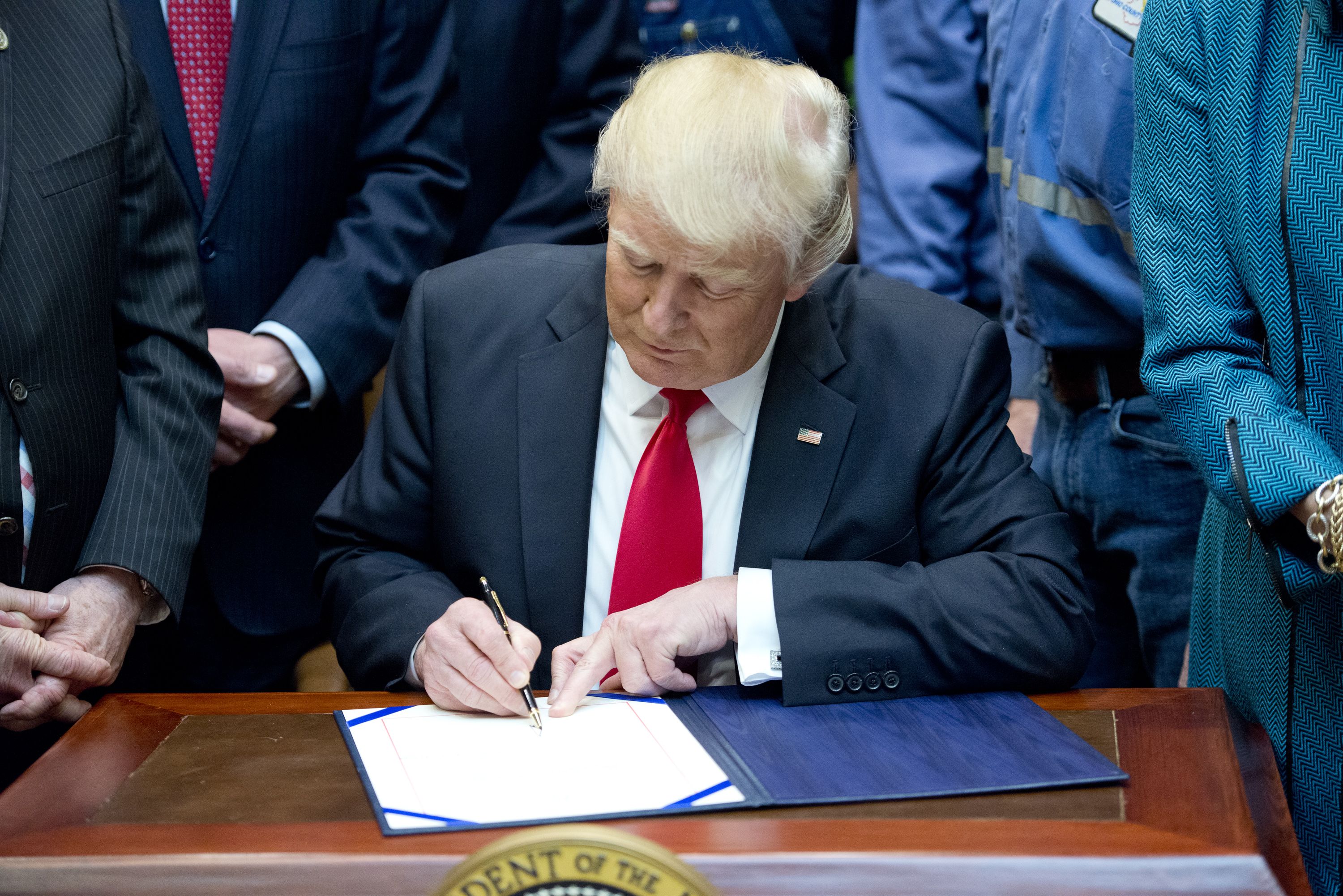
On 14 June 2026, the United States and Iran announced a finalised memorandum of understanding, with an official signing ceremony scheduled for 19 June in Geneva, though subsequent reports indicate the venue shifted to the secluded Burgenstock resort in Switzerland[1][2]. The ceremony’s purpose is to physically execute this diplomatic framework, which unlocks Iranian oil exports and initiates phased sanctions relief in exchange for nuclear curbs[2]. Current crowd-implied probability sits at 3% for any listed individual attending, reflecting the high uncertainty over who will be present, as President Trump may not attend given Iran lacks a direct diplomatic equivalent, and only Iran’s Deputy Foreign Minister has been publicly linked to the event so far[3].
Historically, such high-stakes diplomatic signings between adversarial states often feature senior regional brokers rather than top-tier national leaders, a pattern evident here with Pakistan’s Shahbaz Sharif, who brokered the deal, expected to attend, and Qatar likely to be represented at a senior level[3]. Comparable cases from the Iran–Contra negotiations or the 2015 Paris climate accord show that when a ceremony is moved to a secluded venue, attendance is frequently limited to authorised signatories and key intermediaries, not the full cabinet or presidency, which explains the low probability of any specific individual appearing unless they are a confirmed signatory[3]. Traders should programmatically monitor official announcements from Switzerland’s Foreign Ministry and real-time feeds from Mehr News Agency for confirmed attendee lists, as the ceremony’s location and participants remain fluid[1][2].
The primary catalysts to watch are any updates on Vice President Vance’s delayed visit to Switzerland and official confirmations from Iran’s foreign ministry regarding the event’s status, as recent reports suggest the signing event may be off or sealed remotely[5][8]. A recent Axios report confirms the US and Iran have already remotely signed the memorandum, raising the possibility that the physical ceremony could be cancelled or reduced to a symbolic gathering[8]. Traders should set conditional orders to trigger on any news of Vance’s arrival or a confirmed list of signatories, as the 3% probability hinges entirely on whether the physical event proceeds and who is authorised to attend[5][8]. The settlement window ends 23:59 ET on 7 July 2026, providing a narrow timeframe for these developments to materialise[2].
Methodology
We track Who will attend US-Iran signing ceremony? across the five venues with material prediction-market liquidity. The probability shown is the live Polymarket mid; the comparison rows summarise how each venue treats the underlying contract — fees, KYC thresholds, settlement currency, deposit options. The highlighted row marks the cheapest route into Polymarket's order book.
Resolution & payout
Polymarket-based markets settle through the UMA Optimistic Oracle on Polygon. A proposer submits the outcome, a two-hour challenge window opens, and unchallenged proposals finalise the resolution. Payouts settle automatically in USDC the moment the result is final — no bookmaker, no delay.
Kalshi-based markets settle in USD via the CFTC-regulated clearinghouse. Betfair Exchange settles in GBP/EUR net of commission. Manifold is play-money and does not pay out real funds.
FAQ
- Where can I trade this market with the lowest fees?
- Polymarket is geo-blocked in the US/UK/EU. The easiest 0%-fee broker into the same order book is Kalshi Fees. Kalshi charges up to 7% per trade; Betfair Exchange takes 2-5% commission on net winnings.
- What's the difference between YES and NO shares?
- A YES share pays $1.00 if the event happens, $0 otherwise. A NO share pays $1.00 if the event doesn't happen. The market price between 0¢ and 100¢ is the implied probability.
- What does Polymarket cost to trade?
- Polymarket itself charges 0% — the only cost is the Polygon network fee, typically under $0.01 per transaction. Off-chain venues like Kalshi or Betfair charge 2-7% commission.
- How fast are USDC deposits?
- Polygon credits deposits after 12 confirmations — usually under 30 seconds. Withdrawals follow the same path and land back in your wallet within minutes.
- How reliable are the quoted odds?
- The YES/NO percentages are the live mid-prices of the Polymarket order book. On deep markets they move every few seconds; on thinner ones you'll see short plateaus.
%22%2F%3E%3Cpath%20d%3D%22M%206%2066%20A%2026%2026%200%200%201%2058%2066%22%20fill%3D%22%23E6B98D%22%20opacity%3D%220.9%22%2F%3E%3Ccircle%20cx%3D%2232%22%20cy%3D%2226%22%20r%3D%2222%22%20fill%3D%22%23F5CBA7%22%2F%3E%3Cpath%20d%3D%22M%2010%2026%20A%2022%2028%200%200%201%2054%2026%22%20fill%3D%22%230ea5e9%22%20opacity%3D%220.9%22%2F%3E%3C%2Fsvg%3E) and
and%22%2F%3E%3Cpath%20d%3D%22M%206%2066%20A%2026%2026%200%200%201%2058%2066%22%20fill%3D%22%23E6B98D%22%20opacity%3D%220.9%22%2F%3E%3Ccircle%20cx%3D%2232%22%20cy%3D%2226%22%20r%3D%2222%22%20fill%3D%22%23F5CBA7%22%2F%3E%3Crect%20x%3D%2210%22%20y%3D%224%22%20width%3D%2244%22%20height%3D%2214%22%20rx%3D%227%22%20fill%3D%22%230ea5e9%22%20opacity%3D%220.9%22%2F%3E%3Crect%20x%3D%228%22%20%20y%3D%2218%22%20width%3D%228%22%20%20height%3D%2218%22%20rx%3D%224%22%20fill%3D%22%230ea5e9%22%20opacity%3D%220.7%22%2F%3E%3Crect%20x%3D%2248%22%20y%3D%2218%22%20width%3D%228%22%20%20height%3D%2218%22%20rx%3D%224%22%20fill%3D%22%230ea5e9%22%20opacity%3D%220.7%22%2F%3E%3C%2Fsvg%3E)
Trade Who will attend US-Iran signing ceremony? on Kalshi Fees
Live order book, 0% fees, USDC settlement in seconds.
Open live market →