Platform comparison
| Platform | YES odds | NO odds | Fee | KYC | Settlement | |
|---|---|---|---|---|---|---|
Polymarket (via Kalshi Fees) Pick polygram.ink (preferred broker) |
75% | 25% | 0% (USDC on-chain) | No-KYC up to $1,500 | USDC, auto via UMA oracle | Place a position → |
Polymarket (direct) polymarket.com |
75% | 25% | 0% | Geo-blocked in US/UK/EU | USDC, on-chain | Place a position → |
Kalshi kalshi.com |
— | — | Up to 7% per trade | US-only, KYC required | USD | Place a position → |
Betfair Exchange betfair.com |
— | — | 2-5% commission | Full KYC from first trade | GBP / EUR | Place a position → |
Manifold Markets manifold.markets |
— | — | Play-money (mana) | None — play-money | Mana (no cash-out) | Place a position → |
Outcome probabilities
Current market-implied probability for each outcome, from the live order book.
| Outcome | Probability |
|---|---|
| 31°C | 75% |
| 32°C | 19% |
| 33°C | 2% |
| 25°C or below | 0% |
| 26°C | 0% |
| 27°C | 0% |
| 28°C | 0% |
| 29°C | 0% |
| 30°C | 0% |
| 34°C | 0% |
| 35°C or higher | 0% |
Market context
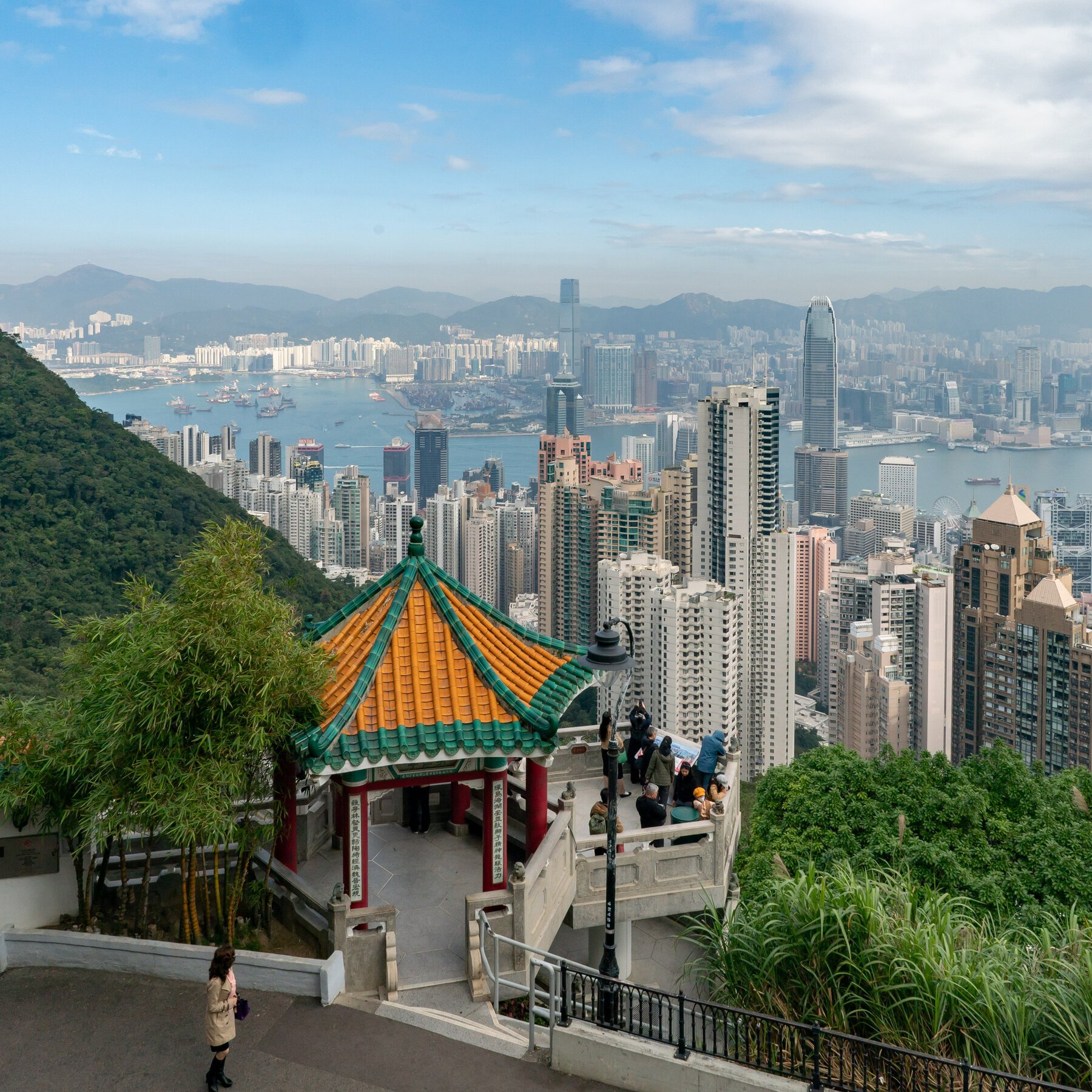
The real-world event at hand is the highest temperature recorded by the Hong Kong Observatory on 8 July 2026, measured in degrees Celsius to one decimal place. This market resolves to the temperature range containing that peak, with data finalised in the Observatory’s “Daily Extract” and published only after the date concludes. The current crowd-implied probability of 0% YES suggests traders see virtually no chance the temperature will fall into the specific range being offered, likely because historical and forecast data point to significantly higher values.
Historically, July is Hong Kong’s hottest month, with average highs near 31.8°C (88°F) and peaks frequently exceeding 34°C. In July 2024, the Observatory recorded a maximum of 34.8°C on 7 July, the highest of that exceptionally hot month [8]. Forecast models for July 2026 indicate daily highs between 30°C and 35°C (86°F–94°F), with some projections reaching 35.6°C (96°F) [1]. Given this context, a 0% probability implies the offered range is well below the expected minimum, making it a clear outlier against both recent extremes and seasonal norms.
Traders approaching this programmatically should monitor the Observatory’s “Daily Extract” release schedule, dependencies on data finalisation, and any real-time weather updates from AccuWeather or Visual Crossing [1][6]. A key catalyst is the confirmation of the “Absolute Daily Max” once the extract is published, which will definitively settle the market. Recent reports note July 2026 has been among Hong Kong’s hottest on record, with temperatures nearing historic highs [9]. For conditional order strategies, the critical dependency is the timing of the extract’s publication, as no resolution occurs until data is officially released.
Methodology
We track Highest temperature in Hong Kong on July 8? across the five venues with material prediction-market liquidity. The probability shown is the live Polymarket mid; the comparison rows summarise how each venue treats the underlying contract — fees, KYC thresholds, settlement currency, deposit options. The highlighted row marks the cheapest route into Polymarket's order book.
Resolution & payout
Settlement runs on-chain. Polymarket's contract logic separates YES and NO shares as conditional tokens; at resolution the winning share lifts to $1.00 and the losing one to $0. The outcome input comes from the UMA Optimistic Oracle, which secures against bad resolution with a bond + dispute window.
Once finalised, the smart contract pays USDC to the holders' wallets within minutes — no withdrawal fees beyond Polygon network gas. Kalshi settles in USD via CFTC clearance, Betfair in account currency net of commission, Manifold in play-money mana with no cash-out.
FAQ
- Is this market available outside the US?
- Polymarket itself is geo-blocked in the US/UK/EU. Always check the legal status of prediction markets in your jurisdiction before trading.
- How does resolution work?
- Through the UMA Optimistic Oracle on Polygon: a proposer submits the outcome, a two-hour challenge window opens, and USDC payouts settle automatically once the result is final.
- What's the difference between YES and NO shares?
- A YES share pays $1.00 if the event happens, $0 otherwise. A NO share pays $1.00 if the event doesn't happen. The market price between 0¢ and 100¢ is the implied probability.
- What does Polymarket cost to trade?
- Polymarket itself charges 0% — the only cost is the Polygon network fee, typically under $0.01 per transaction. Off-chain venues like Kalshi or Betfair charge 2-7% commission.
- How reliable are the quoted odds?
- The YES/NO percentages are the live mid-prices of the Polymarket order book. On deep markets they move every few seconds; on thinner ones you'll see short plateaus.
%22%2F%3E%3Cpath%20d%3D%22M%206%2066%20A%2026%2026%200%200%201%2058%2066%22%20fill%3D%22%23E6B98D%22%20opacity%3D%220.9%22%2F%3E%3Ccircle%20cx%3D%2232%22%20cy%3D%2226%22%20r%3D%2222%22%20fill%3D%22%23F5CBA7%22%2F%3E%3Cpath%20d%3D%22M%2010%2026%20A%2022%2028%200%200%201%2054%2026%22%20fill%3D%22%230ea5e9%22%20opacity%3D%220.9%22%2F%3E%3C%2Fsvg%3E) and
and%22%2F%3E%3Cpath%20d%3D%22M%206%2066%20A%2026%2026%200%200%201%2058%2066%22%20fill%3D%22%23E6B98D%22%20opacity%3D%220.9%22%2F%3E%3Ccircle%20cx%3D%2232%22%20cy%3D%2226%22%20r%3D%2222%22%20fill%3D%22%23F5CBA7%22%2F%3E%3Crect%20x%3D%2210%22%20y%3D%224%22%20width%3D%2244%22%20height%3D%2214%22%20rx%3D%227%22%20fill%3D%22%230ea5e9%22%20opacity%3D%220.9%22%2F%3E%3Crect%20x%3D%228%22%20%20y%3D%2218%22%20width%3D%228%22%20%20height%3D%2218%22%20rx%3D%224%22%20fill%3D%22%230ea5e9%22%20opacity%3D%220.7%22%2F%3E%3Crect%20x%3D%2248%22%20y%3D%2218%22%20width%3D%228%22%20%20height%3D%2218%22%20rx%3D%224%22%20fill%3D%22%230ea5e9%22%20opacity%3D%220.7%22%2F%3E%3C%2Fsvg%3E)
Trade Highest temperature in Hong Kong on July 8? on Kalshi Fees
Live order book, 0% fees, USDC settlement in seconds.
Open live market →