Platform comparison
| Platform | YES odds | NO odds | Fee | KYC | Settlement | |
|---|---|---|---|---|---|---|
Polymarket (via Kalshi Fees) Pick polygram.ink (preferred broker) |
18% | 82% | 0% (USDC on-chain) | No-KYC up to $1,500 | USDC, auto via UMA oracle | Place a position → |
Polymarket (direct) polymarket.com |
18% | 82% | 0% | Geo-blocked in US/UK/EU | USDC, on-chain | Place a position → |
Kalshi kalshi.com |
— | — | Up to 7% per trade | US-only, KYC required | USD | Place a position → |
Betfair Exchange betfair.com |
— | — | 2-5% commission | Full KYC from first trade | GBP / EUR | Place a position → |
Manifold Markets manifold.markets |
— | — | Play-money (mana) | None — play-money | Mana (no cash-out) | Place a position → |
Outcome probabilities
Current market-implied probability for each outcome, from the live order book.
| Outcome | Probability |
|---|---|
| US | 18% |
| France | 9% |
| UK | 8% |
| Germany | 8% |
| Netherlands | 5% |
| Italy | 5% |
| Greece | 3% |
| Australia | 1% |
Market context
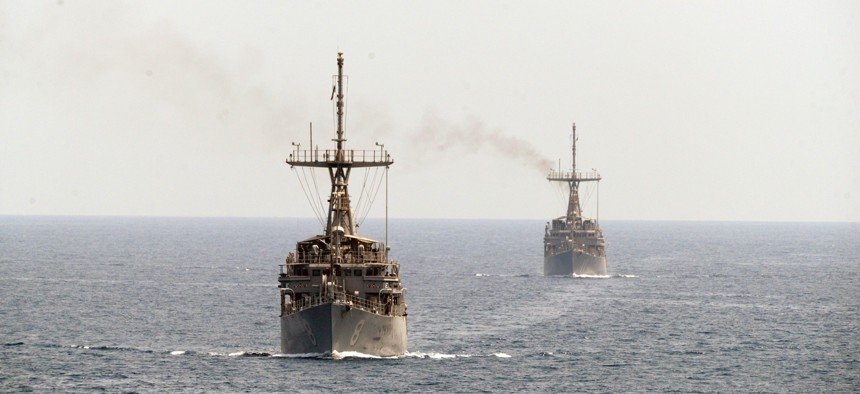
A qualifying event here is a **military vessel** from a national government transiting the Strait of Hormuz, so the practical question is whether any state formally dispatches warships through the channel before the deadline. The current 8% implied probability fits a market where the bar is specific and documentary evidence matters: traders need official naval statements or broad, credible reporting confirming an actual passage, not just rhetoric about “sending ships”. Reuters reported in March that Trump urged countries including China, France, Japan, South Korea and Britain to contribute ships, while also noting French naval deployment plans that could include the strait[2].
Historical and comparable cases suggest that the first names to watch are the states already mentioned in public diplomacy, rather than a wide field of new entrants. In March and April, reporting indicated that some countries were already negotiating or granting passage for their vessels, with India, Pakistan, China and the Philippines cited in coverage of safe transit arrangements, although those reports also mixed commercial and naval traffic and would not all meet this market’s warship definition[9][14]. A prior Polymarket Hormuz event on an earlier deadline ultimately resolved to No for most listed countries, with the US as the lone Yes, which is a reminder that headline-level threats often exceed the number of formally confirmed warship transits[7].
For a programme-driven trader, the useful signals are formal naval press releases, ministry statements, and route-specific reporting from Reuters, AP or major broadcasters, then cross-checking whether the vessel is a warship rather than an escort, auxiliary or civilian ship. Watch for renewed coalition announcements, changes in Gulf force posture, and any ship-tracking evidence that a named frigate, destroyer or support vessel has actually entered the strait; Reuters reported in July that fewer vessels were transiting after renewed US-Iran strikes, while Euronews and other outlets flagged fresh warnings around US warships and route changes in early August[11][12]. In practice, conditional orders on this market would be keyed to verified government language, not general statements that “countries will send ships”[2][10].
Methodology
This page is a comparison snapshot: one live quote, four reference venues with their key attributes, and a single execution path — every trade button routes to Kalshi Fees, which mirrors the Polymarket order book directly.
Resolution & payout
Polymarket-based markets settle through the UMA Optimistic Oracle on Polygon. A proposer submits the outcome, a two-hour challenge window opens, and unchallenged proposals finalise the resolution. Payouts settle automatically in USDC the moment the result is final — no bookmaker, no delay.
Kalshi-based markets settle in USD via the CFTC-regulated clearinghouse. Betfair Exchange settles in GBP/EUR net of commission. Manifold is play-money and does not pay out real funds.
FAQ
- Is this market available outside the US?
- Polymarket itself is geo-blocked in the US/UK/EU. Always check the legal status of prediction markets in your jurisdiction before trading.
- How does resolution work?
- Through the UMA Optimistic Oracle on Polygon: a proposer submits the outcome, a two-hour challenge window opens, and USDC payouts settle automatically once the result is final.
- What's the difference between YES and NO shares?
- A YES share pays $1.00 if the event happens, $0 otherwise. A NO share pays $1.00 if the event doesn't happen. The market price between 0¢ and 100¢ is the implied probability.
- How fast are USDC deposits?
- Polygon credits deposits after 12 confirmations — usually under 30 seconds. Withdrawals follow the same path and land back in your wallet within minutes.
- Do I need to KYC for this market?
- On Polymarket directly, no — it's wallet-based. Intermediary brokers like Kalshi Fees trigger KYC only above $1,500 of lifetime trading volume; under that you trade pseudonymously with a single wallet address.
%22%2F%3E%3Cpath%20d%3D%22M%206%2066%20A%2026%2026%200%200%201%2058%2066%22%20fill%3D%22%23E6B98D%22%20opacity%3D%220.9%22%2F%3E%3Ccircle%20cx%3D%2232%22%20cy%3D%2226%22%20r%3D%2222%22%20fill%3D%22%23F5CBA7%22%2F%3E%3Cpath%20d%3D%22M%2010%2026%20A%2022%2028%200%200%201%2054%2026%22%20fill%3D%22%230ea5e9%22%20opacity%3D%220.9%22%2F%3E%3C%2Fsvg%3E) and
and%22%2F%3E%3Cpath%20d%3D%22M%206%2066%20A%2026%2026%200%200%201%2058%2066%22%20fill%3D%22%23E6B98D%22%20opacity%3D%220.9%22%2F%3E%3Ccircle%20cx%3D%2232%22%20cy%3D%2226%22%20r%3D%2222%22%20fill%3D%22%23F5CBA7%22%2F%3E%3Crect%20x%3D%2210%22%20y%3D%224%22%20width%3D%2244%22%20height%3D%2214%22%20rx%3D%227%22%20fill%3D%22%230ea5e9%22%20opacity%3D%220.9%22%2F%3E%3Crect%20x%3D%228%22%20%20y%3D%2218%22%20width%3D%228%22%20%20height%3D%2218%22%20rx%3D%224%22%20fill%3D%22%230ea5e9%22%20opacity%3D%220.7%22%2F%3E%3Crect%20x%3D%2248%22%20y%3D%2218%22%20width%3D%228%22%20%20height%3D%2218%22%20rx%3D%224%22%20fill%3D%22%230ea5e9%22%20opacity%3D%220.7%22%2F%3E%3C%2Fsvg%3E)
Trade Which countries will send warships through the Strai… on Kalshi Fees
Live order book, 0% fees, USDC settlement in seconds.
Open live market →